An NFT is a locked asset: you own it, but it earns nothing and does nothing while it sits in your wallet. Unlocking it normally means handing custody to a platform — the exact thing the asset was supposed to protect you from. Nova had to make an NFT productive without ever taking the keys.
- 01Put three primitives — lending, leasing and minting — behind one non-custodial interface, so a single NFT can be collateral, a rental income stream or a fresh mint without leaving the app.
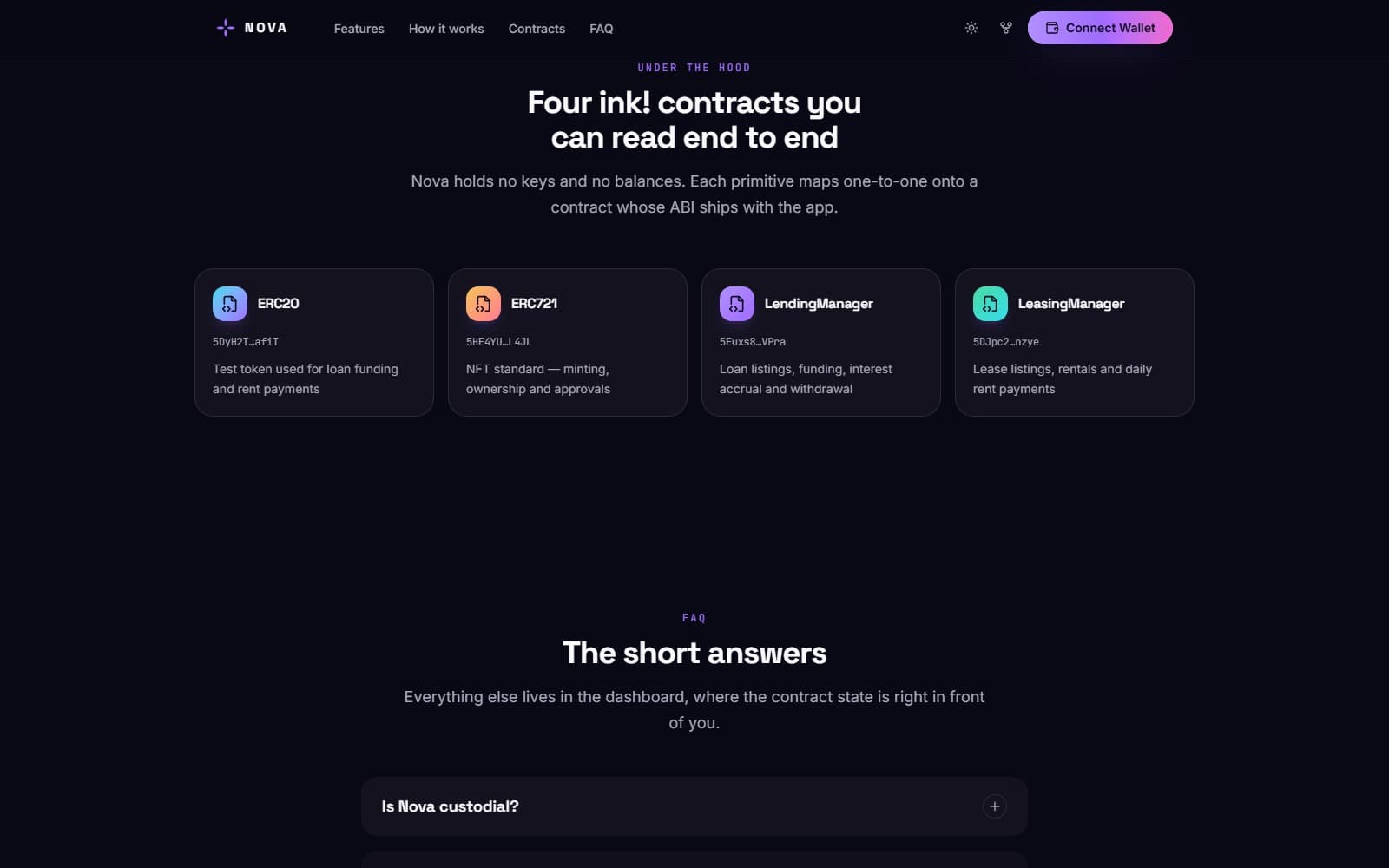
- 02Executed every action through inspectable ink! contracts rather than a backend: four contracts (ERC-20, ERC-721, LendingManager and LeasingManager) carry the logic, and their ABIs ship with the app so anyone can read them end to end.
- 03Kept the keys with the user — authorisation runs through the Polkadot.js extension, which signs each transaction and nothing else, so there is no Nova account to create and none to lose access to.
- 04Streamed positions from the chain over WebSocket subscriptions that refresh roughly every two seconds, so supplied, borrowed and earned balances are computed from real contract state instead of cached numbers.
- 05Designed the failure mode rather than hiding it: when the node is unreachable the wallet still connects and balances stay readable from the extension, on-chain features disable, and the dashboard says the node is down instead of failing silently.
Nova turns a collectible into working capital with no custodian in the middle — lend against it, lease it out or mint a new one, with every position read live from ink! contract state.
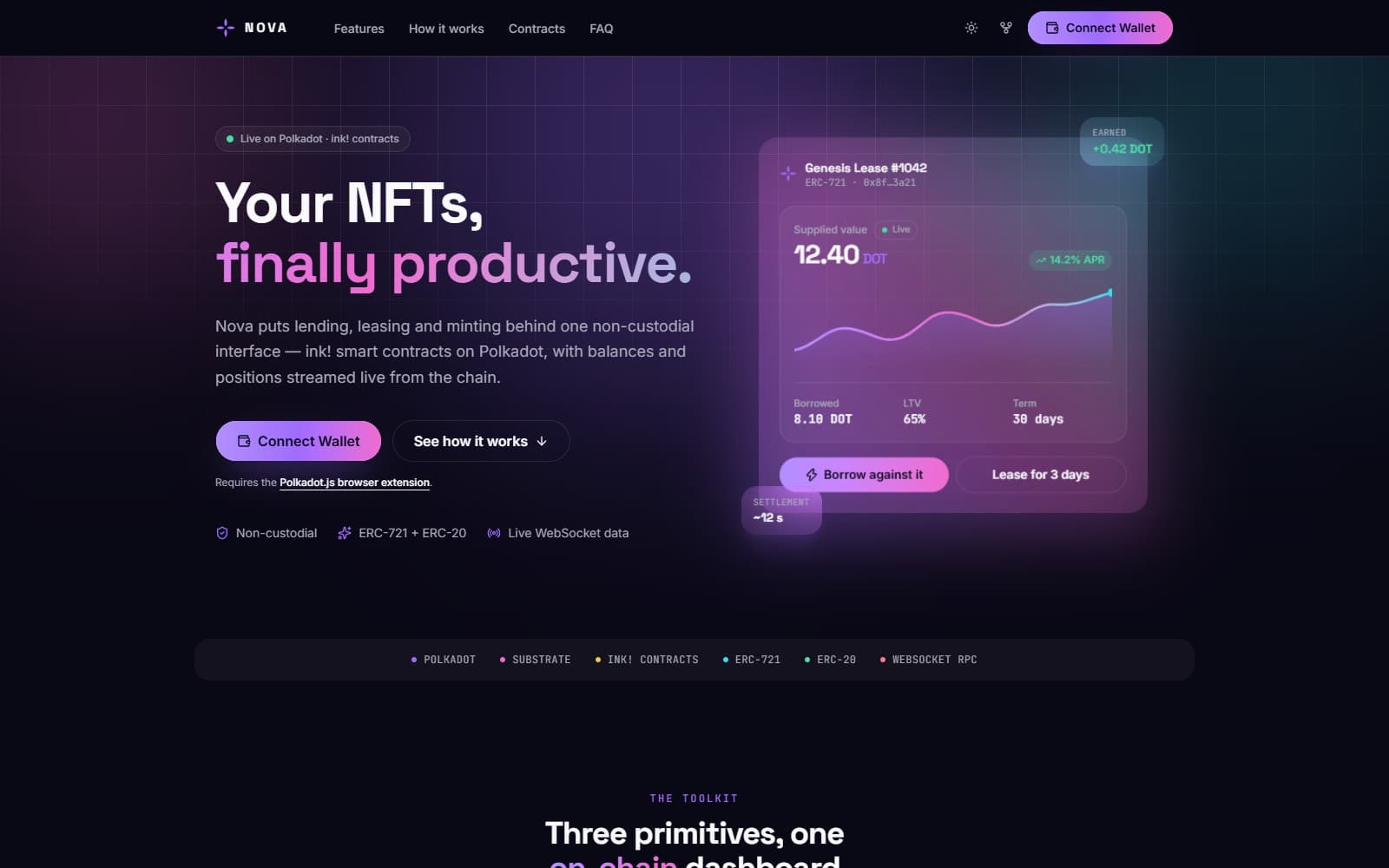
PolkadotSubstrateink! contractsERC-721ERC-20WebSocket RPC