Employment-law guidance is easy to get wrong and expensive when you do. The people asking are usually managers without a legal background, mid-problem, looking for a straight answer — and a confident wrong answer about notice periods or dismissal does far more damage than an honest "this one needs a solicitor".
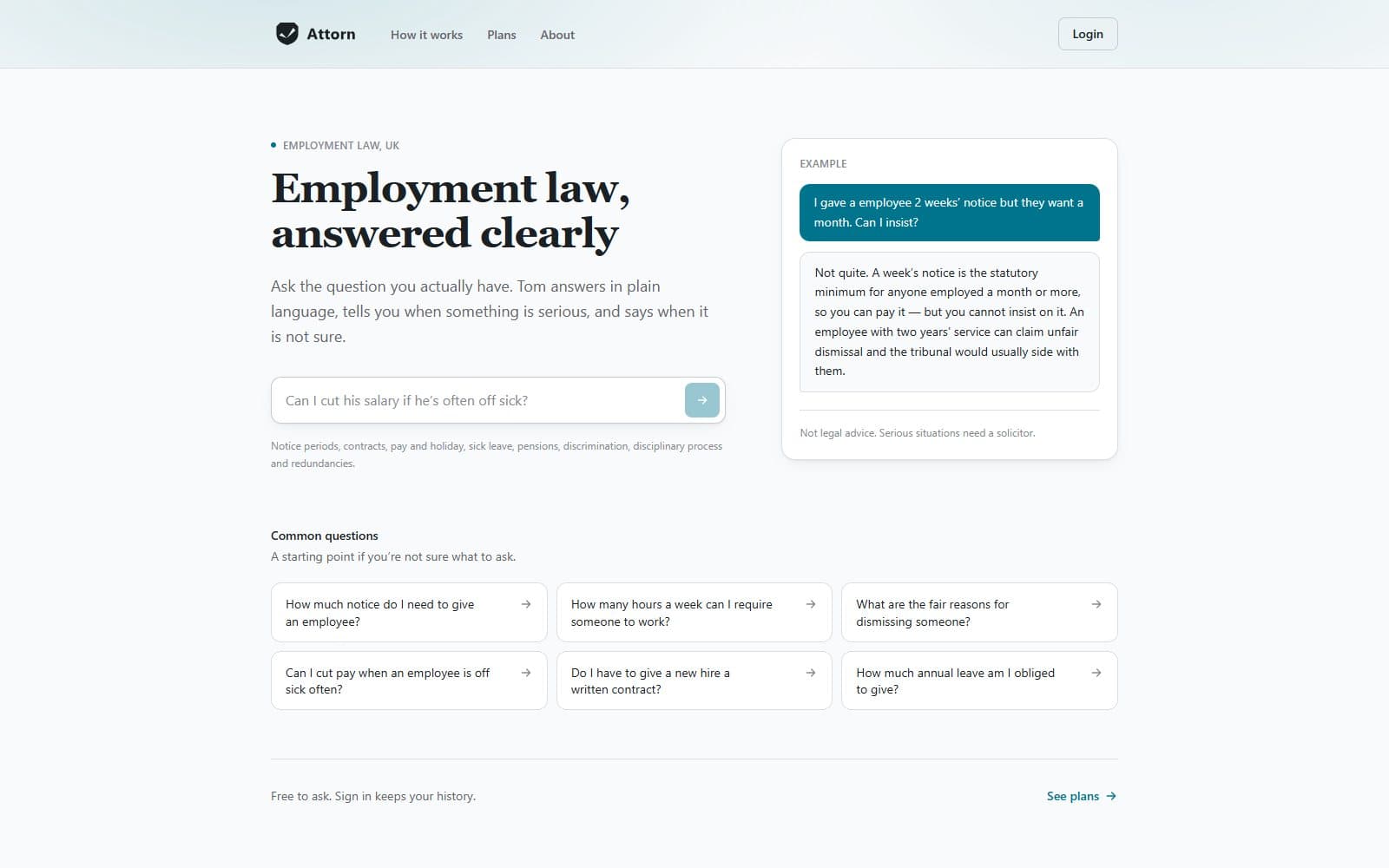
- 01Scoped the assistant to one jurisdiction and a defined set of topic areas — notice periods, contracts, pay and holiday, sick leave, pensions, discrimination, disciplinary process and redundancies — instead of attempting employment law in general.
- 02Wrote it to answer in plain language and show its reasoning, so a reply explains the rule behind the answer rather than simply asserting it.
- 03Built seriousness detection into the response: when a question touches unfair dismissal, discrimination or a tribunal, the assistant says so and points to a solicitor instead of quietly answering.
- 04Made uncertainty visible — Tom states when he is not sure, and the interface carries a standing "not legal advice" boundary rather than burying it in fine print.
- 05Kept the entry point low-friction: free to ask, with common questions offered as starting points for people who do not know how to phrase what they need.
Attorn gives an employer a first, honest read on an employment-law question — a plain-language answer, the reasoning behind it, and a clear signal when the situation has outgrown self-service and needs a solicitor.
Next.jsLLM APIPrompt engineeringVercel